
The Problem We’re All Ignoring
The Year We Stopped Building a Tool and Started Building an Operator. As we close out 2025, I want to share the most important lesson we learned this year building OnBuddy, and why it’s changed everything about how we think about workplace technology
The average employee now toggles between 6-11 different applications to get their work done. HR and Ops teams are drowning in Slack messages, email requests, and support tickets for things that shouldn’t require human intervention. “Can you update my address?” “Where’s the employee handbook?” “How do I request PTO?” All of these and more aren’t complex queries. They’re process execution disguised as questions.
The World has spent the last two years obsessed with AI copilots. Tools that help you write faster, code better, analyze data more efficiently. But we missed the real problem: most workplace friction isn’t about creation. It’s about execution. It’s about the mundane, repetitive processes that consume 60-70% of a knowledge worker’s day. Then last year saw a lot of AI-Agents sprung out, promising autonomous actions but that also fell short as they produced a lot of qustionable outputs and unreliable in most cases except when prompted.
From Checklist Managers to Intelligent Operators
When we started building OnBuddy, we made the same mistake everyone else did. We built a checklist manager and automate employee onboarding. A better way to organize tasks. Within months, we realized we were solving the wrong problem.
Our users didn’t need another productivity tool. They needed an operator. Someone (or something) that could actually DO the work, not just organize it. They needed a system that could not only answer questions, but execute HRIS workflows, update records, triage requests, and route complex issues to the right human, all without leaving their workspace and not being prompted to do so all the time.
So we rebuilt our approach.
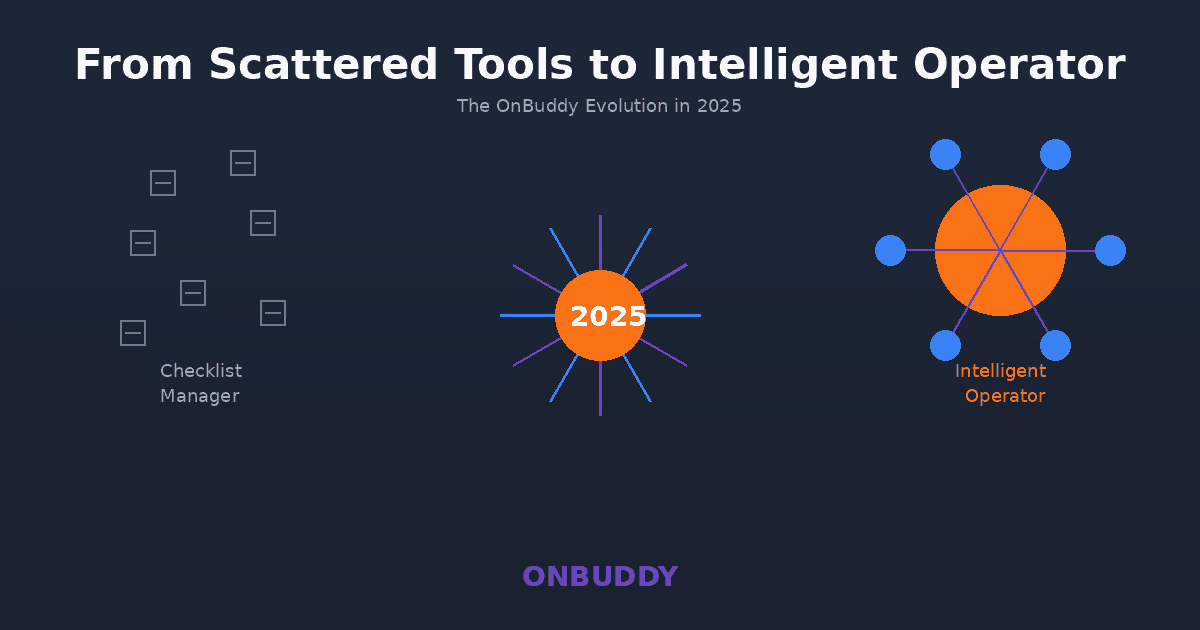
Today, OnBuddy resolves 99% of employee queries automatically. It handles onboarding workflows, manages employee records, maintains org charts, runs document processes, and operates across Slack, Teams, WhatsApp, and email. But more importantly, it does this while learning your organization’s specific processes and adapting to how your team actually works.
This transformation taught us something critical: the future of work isn’t about making humans more productive. It’s about making humans unnecessary for the things that don’t need human judgment.
Why HR and Ops is the Wedge
People ask me why we’re focused on HR and Operations. The reason is simple; These functions are the nervous system of every organization. They touch every employee, every day. They’re process-heavy, time-sensitive, and currently solved by throwing more people at the problem.
More importantly, HR and Ops problems are universal. Every company has onboarding. Every company has PTO requests. Every company has org structure. The workflows are remarkably similar across industries, which means solutions can scale in ways that vertical-specific tools cannot.
When you solve for HR and Ops, you’re not just automating tasks. You’re creating an intelligent layer that sits between your people and your tools, learning how work actually flows in your organization.
The future of work means making humans unnecessary for tasks that don’t need human judgment.
To Our Community
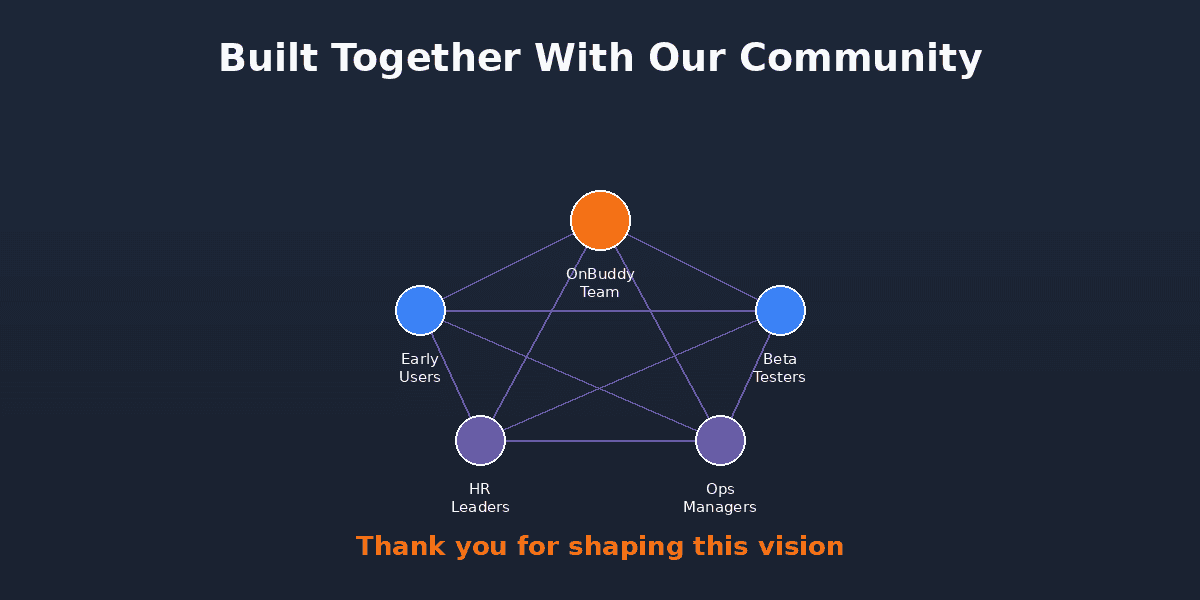
None of what we’ve built would exist without our early users, testers, and customers who trusted us when we were just an onboarding checklist manager and stayed with us as we completely reimagined what we were building.
Your feedback shaped this vision. Your patience with half-baked features taught us what mattered. Your willingness to share your operational pain points showed us where the real problems were.
To every HR leader who took a demo, every Ops manager who gave us feedback, every employee who tested features and told us what actually mattered: thank you. You’re not just customers. You’re co-builders of what we believe will become essential infrastructure for how organizations operate.
Notable insights in 2025
The biggest shift in our thinking this year wasn’t technical. It was philosophical.
We stopped asking “how do we help people work better?” and started asking ““What should work look like in an ideal future?”
One thing every response we got pointed towards is that employees, executives, HR, OPs, Software Engineers, Managers are tired of context switching across tools and systems that spring up everyday in this vibe-coding era.
That question led us to rebuild OnBuddy from a task manager into an intelligent operator. And that transformation showed us something bigger: we’re at the beginning of a fundamental shift in how organizations and units will function.
More on that soon. For now, thank you for being part of this journey.
Here’s to 2026, and to building something that matters.